Search for
All you need
What do you need to look?

As power electronic devices evolve toward higher power density, miniaturization, and greater integration, thermal management is becoming a critical factor influencing device performance and long-term operational reliability.
In IGBT power modules, industrial inverters, UPS systems, motor drives, and new-energy power conversion equipment, power devices generate substantial heat during operation. If heat cannot be conducted and dissipated promptly, it may lead to an increase in the device’s junction temperature, a decline in operating efficiency, and even compromise the reliability of the entire system.
Although traditional extruded heat sinks boast mature manufacturing processes and significant cost advantages, they are subject to certain manufacturing constraints regarding fin height, thickness, and spacing. When devices demand greater heat-dissipation area and space efficiency, conventional air-cooling solutions may gradually approach their performance limits.
So, without immediately switching to a complex liquid-cooling system, are there other ways to improve air-cooling performance?
Wakefield Thermal’s skived fin technology offers an alternative thermal design approach for high-power electronic devices.
Skived fins, commonly referred to as skived heat sink fins, are a manufacturing technique in which aluminum or copper base materials are directly machined into heat sink fins using a precision metal skiving process.
Unlike traditional welded heat sinks, Skived Fin does not manufacture the fins separately and then attach them to the base plate by welding or other methods.
Its core features are:
The fins and the base plate are machined directly from a single piece of metal, resulting in a continuous, integrated structure.
This structure offers two key advantages:
1. Reduce the bonding interface between the fins and the base plate
Traditional welded heat sinks require fins to be attached to the base plate using solder or other joining methods, and the interface introduces additional thermal resistance.
The skived fin features an integral structure, eliminating the welded bond between individual fins and the base plate, which helps reduce thermal contact resistance at this interface.
2. Achieving a higher-density fin structure
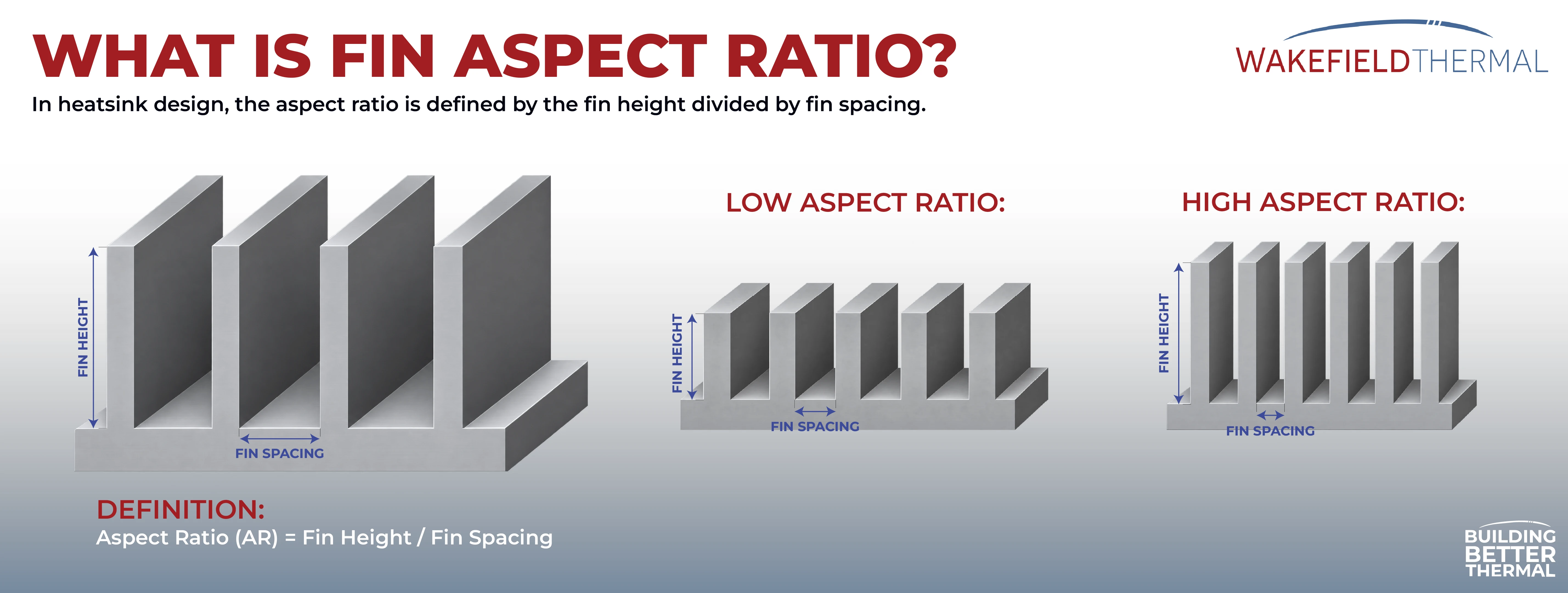
The milling process can produce thin fins with small pitch and considerable height, thereby increasing the effective heat-dissipating surface area within a confined space.
This design offers significant practical value for power electronic devices that are space-constrained and subject to high thermal loads.
The manufacturing principle of skived fins can be simply understood as follows: a thin layer of metal is precisely shaved from the surface of a solid aluminum or copper block and then bent upward to form the fins.
The entire process does not involve welding individual fins to a base plate; instead, they are machined directly from the raw material stock.
Its basic process includes:
Choose a suitable aluminum or copper substrate.
Planing is performed using specialized precision tools to achieve the specified depth and angle.
The thin layers of metal removed by planing are gradually built up layer by layer.
Repetitive processing forms continuously arranged heat-dissipating fins.
Cutting, CNC machining, and surface treatment are performed in accordance with the design specifications.
Ultimately, a heat-dissipation structure is formed in which the fins and the base plate are seamlessly integrated.
Material selection also affects the final thermal performance:
铝(Aluminum):It features a light weight, good machinability, and relatively reasonable cost, making it suitable for various forced-air cooling applications.
铜(Copper):It has higher thermal conductivity, offering advantages in applications involving high heat fluxes and where improved heat dissipation is required, but it typically also comes with higher weight and material costs.
The specific material to be used must be determined through a comprehensive assessment of thermal load, installation space, weight constraints, and cost requirements.
For IGBTs, power modules, and industrial power conversion equipment, thermal design must consider not only whether heat can be conducted to the heatsink but also whether the heatsink can effectively dissipate that heat into the air.
The advantages of skived fins are mainly reflected in the following aspects.
1. Higher heat dissipation surface area
By using thinner fins and a denser arrangement, the surface area in contact with the air can be increased within a limited space.
With appropriately designed fin height, spacing, and airflow conditions, overall air-cooling performance can be improved.
2. Integrated Metal Structure
The fins and the base plate are formed directly from a single piece of material, eliminating the separate bonding interface found in conventional welded structures.
This is beneficial for high-power applications that require reducing thermal resistance along the conduction path.
3. More flexible structural processing
After planing is completed, it can also be combined with CNC machining to achieve various structural designs, for example:
Mounting holes and special hole locations.
Local grooves and clearance features.
Component mounting step.
Specific dimensions of the base plate structure.
Customized installation interface.
Additionally, anodizing, nickel plating, or other suitable surface treatments can be applied according to application requirements.
4. Can be combined with other thermal management technologies
In applications where heat sources are highly concentrated or local heat flux densities are high, skived fins can also be combined with technologies such as heat pipes to transfer localized heat to a larger-area dissipation region.
Skived Fin is not limited to a specific type of equipment; rather, it is particularly well-suited for applications with stringent requirements for heat-dissipation area, structural space, and thermal conductivity.
01|IGBT and Power Modules
IGBTs are widely used in industrial inverters, motor drives, new energy power conversion, and power control systems.
Under high-power operating conditions, power modules experience significant thermal loading. A heatsink must balance heat dissipation capability, fin geometry, and airflow design.
Skived Fin can be an option for high-performance air-cooling solutions.
02|Industrial Inverters and Motor Drives
Industrial inverters and motor drives typically need to manage continuously generated heat within relatively compact structures.
By optimizing fin density and airflow channels, the heat exchange performance of the heatsink can be improved within a confined space.
03|UPS and Power Systems
Power conversion devices in UPSs, rectifiers, and industrial power equipment must maintain a stable operating temperature over long-term operation.
An efficient thermal design helps reduce thermal stress on components and supports stable system operation.
04|Welding Equipment and HighPower resistor
Industrial welding equipment and high-power resistors typically experience high thermal loads, placing demands on the heat sink’s thermal capacity, heat-dissipating surface area, and structural reliability.
Under suitable airflow conditions, Skived Fin can provide a high-performance air-cooling solution for these devices.
In practical radiator selection, common manufacturing processes include extrusion, welding, and machining.
Each of the three technologies has its own characteristics, and there is no single “best” solution that applies to all applications.
1. Extruded Fin|Extruded Heat Sink
The heat sink fins and base plate are formed directly through an extrusion process.
Features:
The manufacturing process is mature.
Suitable for standardization and mass production.
The cost is relatively economical.
Fin thickness, height, and spacing are constrained by the extrusion process.
Applications: General industrial power supplies, electronic equipment, and standard air-cooling heat dissipation.
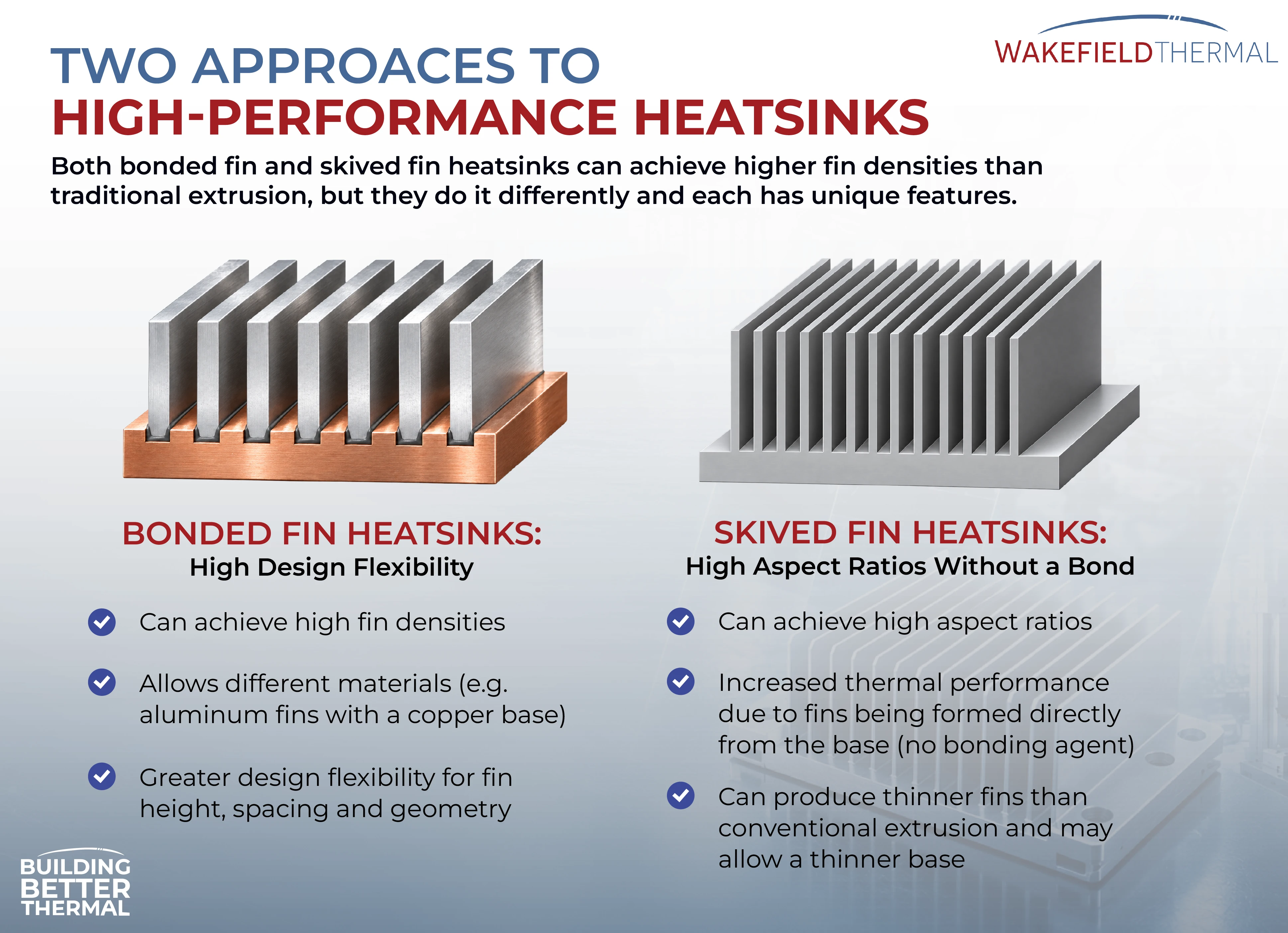
2. Bonded Fin|Welded Radiator
First, manufacture the heat sink fins separately, then attach the fins to the base plate.
Features:
The fin structure design is flexible.
Higher fin densities can be achieved.
Able to combine different materials.
A thermal interface exists between the fins and the base plate, so the thermal resistance of the interface layer and the reliability of the connection must be considered.
Applicable to: Cooling systems requiring high fin density and specialized structural designs.
3. Skived Fin|Skived Heat Sink
Fins are formed directly from the metal substrate using a precision milling process.
Features:
The fins are integrally molded with the base plate.
No separate fin weld bond layer.
It can achieve thinner fins and higher fin density.
It helps increase the heat dissipation area within a limited space.
There are certain requirements for the processing structure and mechanical protection of the fins.
Applications: High-power electronic devices, IGBTs, inverters, and high-performance air-cooling systems.
Please note:Skived Fin does not mean that it is superior to extruded or welded heat sinks in all cases. The actual cooling performance also depends on the material’s thermal conductivity, the fin geometry, airflow rate, static pressure, contact thermal resistance, and the overall system design.
| Compare Projects | Extrusion type | Welded | Planing type |
|---|---|---|---|
| Fins and Base Plate | One-piece molding | Independent connection | One-piece molding |
| Independent bonding layer | None | There is/are | None |
| Fin density | Subject to process limitations | More flexible | relatively high |
| Structural flexibility | General | relatively high | relatively high |
| Manufacturing cost | Usually more economical | It depends on the design. | It depends on the design. |
| Typical applications | Conventional cooling | High-Density Heat Dissipation | High-performance air cooling |
For electronic equipment developers, selecting a heatsink requires more than just comparing the number of fins or the product’s dimensions.
The following factors are equally important:
1. Thermal Load
Determine the heat generated by the power devices and the maximum allowable operating temperature of the system.
2. Ambient Temperature
The actual operating environment of the equipment directly affects the thermal design’s temperature margin.
3. Airflow Conditions
Fan airflow, static pressure, duct design, and the direction of airflow all affect a heatsink’s actual performance.
4. Fin Geometry
The fin height, thickness, spacing, and arrangement must be matched to the actual airflow rate and static pressure. Higher fin density is not always better; an overly dense structure can also increase airflow resistance.
5. Installation Space and Mechanical Requirements
It is necessary to comprehensively consider the baseplate dimensions, mounting hole locations, weight, vibration, and mechanical protection requirements.
6. Total Cost
In addition to the cost of the heat sink itself, one should also consider the costs of the fan, mounting hardware, maintenance requirements, and the entire thermal management system.
For certain high-power applications, a properly designed skived-fin air cooler can extend the operational envelope of air-cooling systems and reduce the costs and structural complexity associated with prematurely adopting liquid-cooling systems.
As new energy vehicles, industrial automation, energy storage, power conversion, and power electronic devices continue to advance, thermal management has become a critical design aspect that significantly impacts the performance and reliability of electronic systems.
From IGBT power modules to industrial inverters, and from UPS systems to new‑energy power conversion systems, the heat sink’s structure, materials, and manufacturing processes must be carefully selected to suit the specific application.
BONCHIP ELECTRONICS continuously monitors product technologies and industry applications in the fields of power electronics and thermal management.
Focusing on relevant electronic components and thermal management solutions, BONCHIP is committed to providing customers with product sourcing, part-number matching, application‑requirement consultation, and supply‑chain support.
If your project is facing challenges such as high power density, limited thermal clearance, or inadequate performance from conventional air-cooling solutions, please contact BONCHIP to discuss your specific application requirements and jointly explore more suitable thermal management solutions.
BONCHIP ELECTRONICS
Excellence in Distribution, Connecting More.
Outstanding distribution, connecting more.
Electronic Components and Supply Chain Solutions
Product Selection | BOM Support | Supply Chain Integration | Project Support