Search for
All you need
What do you need to look?
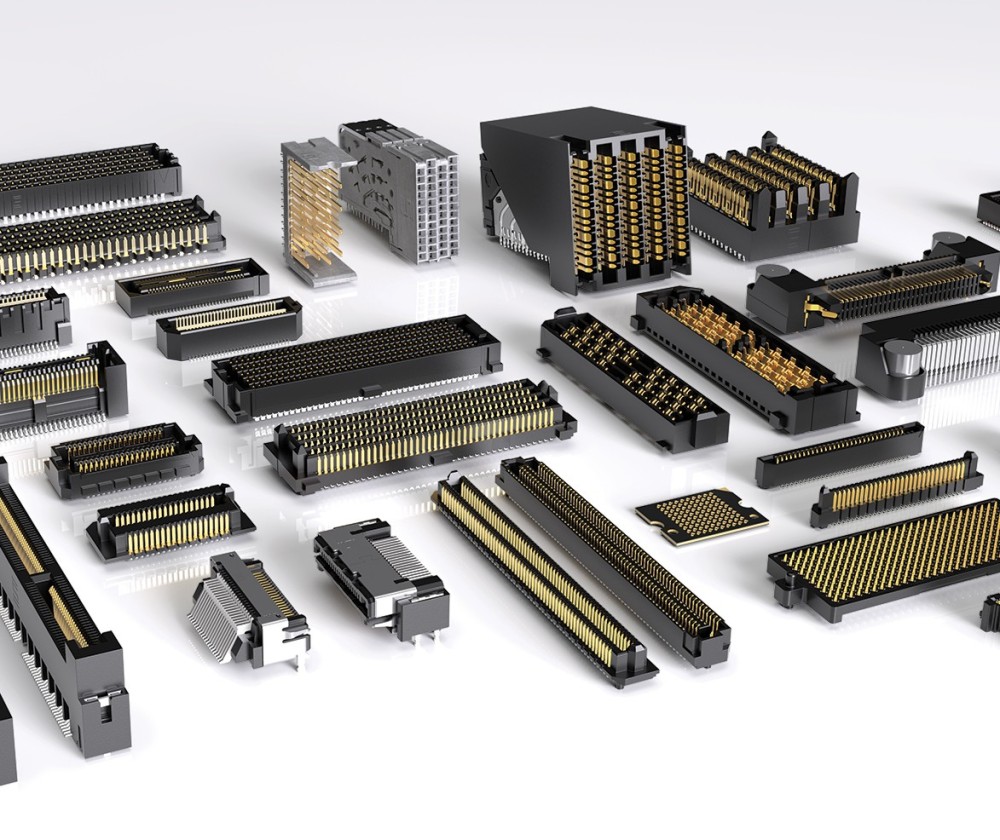
Among hardware designers, there’s a widely shared consensus: no matter how powerful a chip is, if the signals can’t get through between boards, all the effort is for naught. In 2026, the power consumption of a single AI server card will exceed 700W, switch port speeds will reach 800G, and military embedded devices will pack multiple high-speed serial links into palm-sized spaces—behind these scenarios lies a reliable high-speed board-to-board and backplane interconnect system.
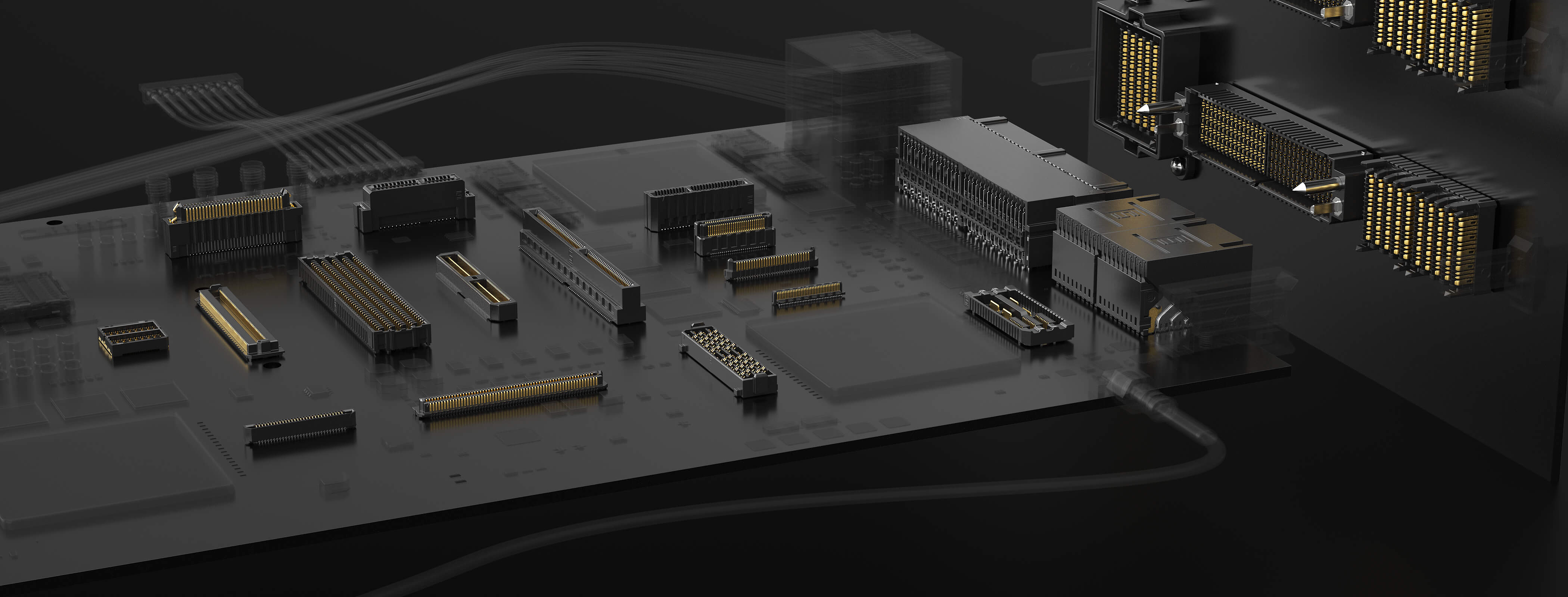
Samtec is currently the industry’s leading supplier of high-speed board-to-board and backplane connectors, with the most comprehensive product portfolio—without exception. From a single‑lane 112Gbps PAM4 to an aggregate switch‑backplane bandwidth of 4.0 Tbps, from ultra‑thin 1 mm‑stacking to 40 mm‑high spacing, and from vertical and right‑angle to edge‑mount configurations, it virtually covers every high‑speed interconnect scenario you can imagine. This article avoids cluttering the text with endless parameter tables; instead, starting from real-world engineering applications, we clearly explain each product line to help you avoid costly detours during the selection process.
Let me start by sharing a real-life project experience. Last year, I helped an AI computing power client with vendor selection; they were using a domestically produced GPU accelerator card, and the connection between the card and the backplane originally relied on a certain traditional manufacturer’sHigh Speed Connector. Single-card testing in the lab was entirely normal; however, during large-model training with eight cards running in parallel, link retransmissions and PCIe speed throttling occurred sporadically. After two weeks of investigation, we traced the root cause to excessive crosstalk in the connectors under high‑density, multi‑lane parallel operation. After switching to Samtec’s NovaRay, the issue disappeared immediately.
This incident underscores a key principle: high-speed connectors are not passive components that can be considered “good enough” simply because they can be plugged in. When single‑lane data rates reach 56 Gbps or even 112Gbps PAM4, the connector’s impedance control, crosstalk suppression, and insertion loss directly determine whether the entire signal‑to‑signal link can function properly. Samtec’s high-speed board-to-board products boast key metrics of 112Gbps PAM4 per lane, aggregate bandwidth exceeding 4.0 Tbps, and extremely low crosstalk at 40GHz and above—figures that are not lab‑level hype but reflect the genuine, critical needs of today’s AI clusters and high‑end networking equipment.
The entire product line is divided into six major categories: high‑density arrays, dual‑row straight‑pin connectors, ground‑plane connectors, ultra‑miniature interconnects, edge‑card systems, and high‑speed backplane systems. Now let’s break it down one by one.
High‑density arrays constitute the largest segment within Samtec’s high‑speed product line and are the most widely used category in AI servers and high‑end switches. Its defining feature is an open-pin-field design, meaning that pins can be freely configured as single-ended signals, differential pairs, or power supplies, offering exceptional routing flexibility.
NovaRay is Samtec’s highest‑speed array connector, supporting 112Gbps PAM4 per lane and an aggregate data rate of 4.0 Tbps—equivalent to nine IEEE 400G lanes operating in parallel. It employs a fully shielded differential-pair design, with crosstalk suppressed to well below 40 GHz, and impedance control is extremely tight.
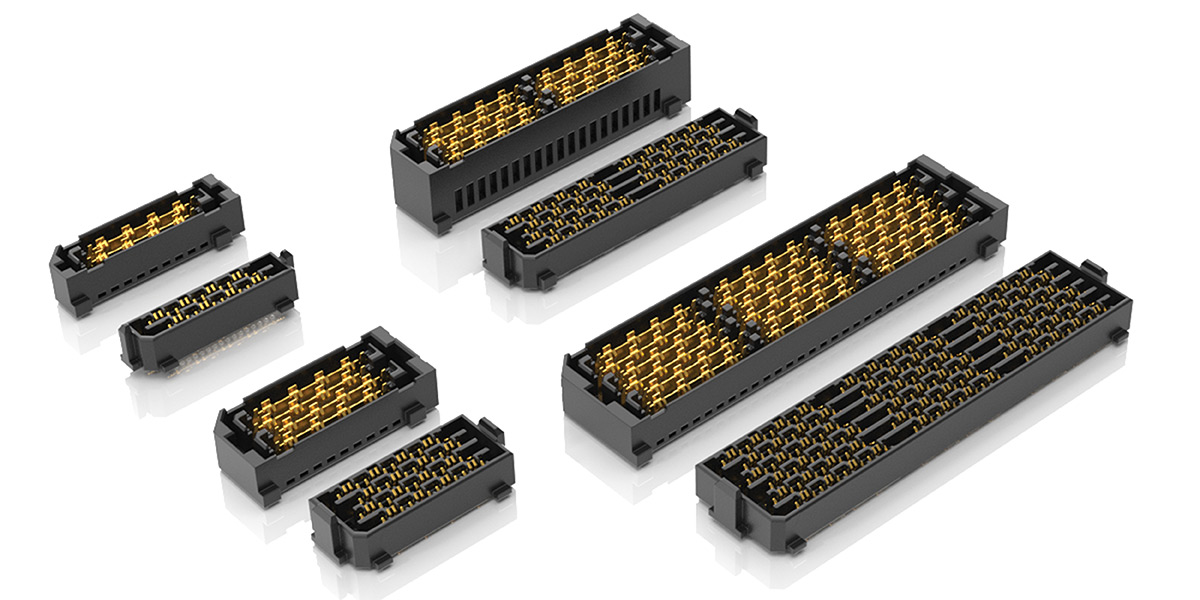 One particularly practical design detail: the NovaRay employs a two-point contact, which offers significantly higher reliability than a single-point contact and is less prone to momentary interruptions in vibration-prone environments. Moreover, when the stacking height varies, the data rate exhibits minimal jitter, which means you can switch from a 7mm stack‑up to a 25mm one without having to re‑perform signal‑integrity verification.
In practical applications, NovaRay is primarily used in 800G switches, high-speed backplanes for AI training clusters, and high-end test and measurement equipment. Its footprint is 40% smaller than that of conventional arrays, saving PCB space while maintaining the same throughput—critical for high-density rack-mounted equipment.
AcceleRate HP also supports 112Gbps PAM4 and is positioned with a stronger focus on cost optimization compared to NovaRay. It features a 0.635mm pitch and a four-row design, supporting up to 400 pins, with a stacking height of 5 to 10 mm, and is compatible with PCIe 6.0, CXL 3.1, and 100GbE.
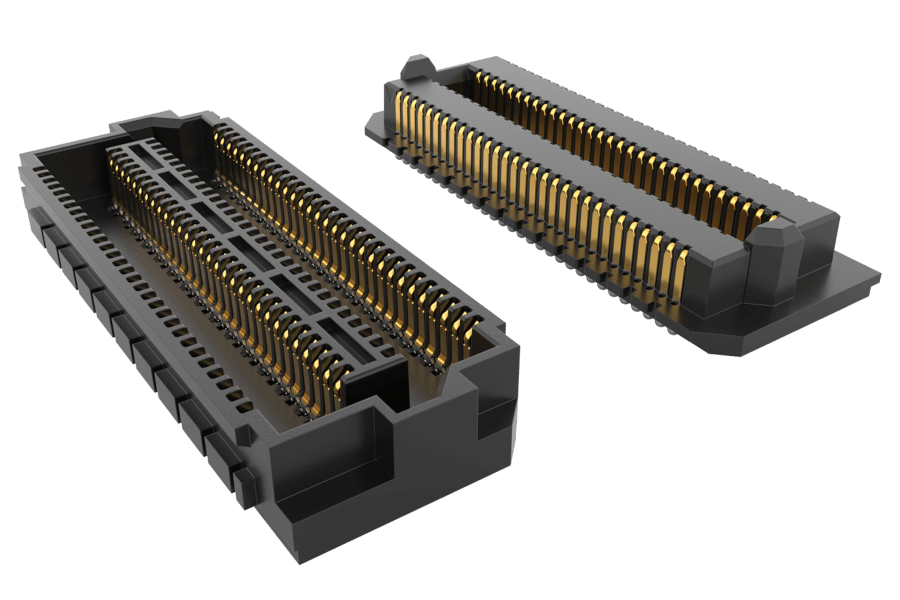
The solder column termination of this product is highly compatible with manufacturing facilities, delivering excellent reflow soldering yields. If your project requires 112G‑bps throughput but has a limited budget, AcceleRate HP is a more practical choice than NovaRay.
AcceleRate HD supports 64Gbps PAM4, and its most notable feature is its compact form factor—just 5mm wide—with a four-row open-pin‑out architecture that accommodates up to 400 I/Os. For a 0.635mm pitch, Edge Rate contacts are used, with stacking heights ranging from 5mm to 16 mm.
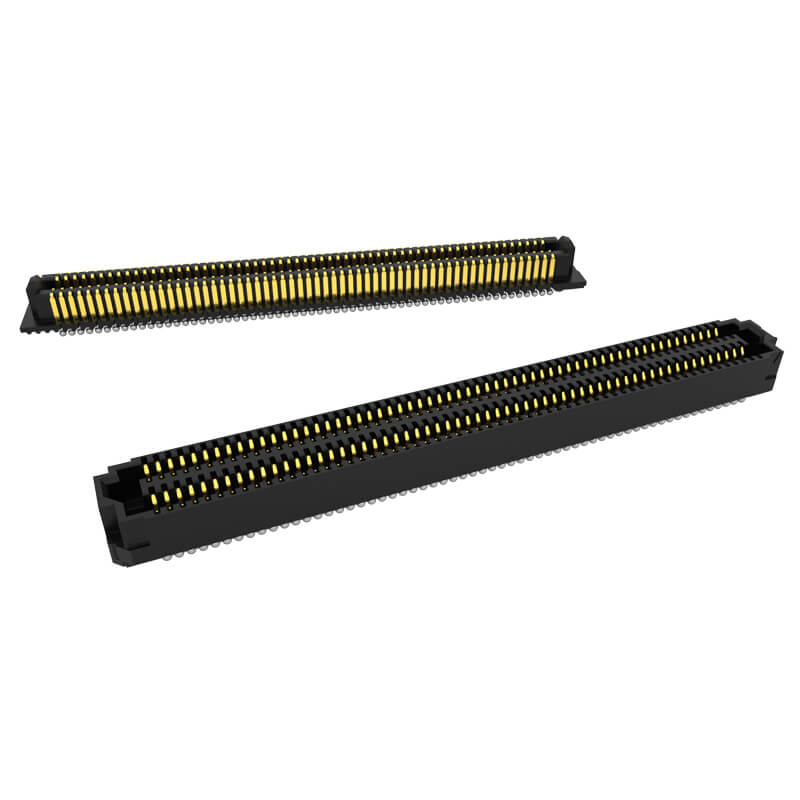
What does a 5mm width signify? It’s nearly half as narrow as a conventional array. In scenarios where board‑card space is extremely limited—such as compact network security appliances and military‑grade embedded computing boards—AcceleRate HD can help you free up a substantial amount of routing area. It is also compatible with PCIe 6.0 and CXL 3.1, and supports solder‑bump termination for convenient manufacturing.
AcceleRate mP is an array specifically designed for “signal‑power hybrid transmission,” supporting up to 8 power lanes and 240 signal lanes, and accommodating 64Gbps PAM4 (32Gbps NRZ). Its power blade rotates by 90 degrees, providing more uniform heat dissipation and enhanced current-carrying capacity, while also simplifying the design of the board‑out‑of‑board (BOR) interface.
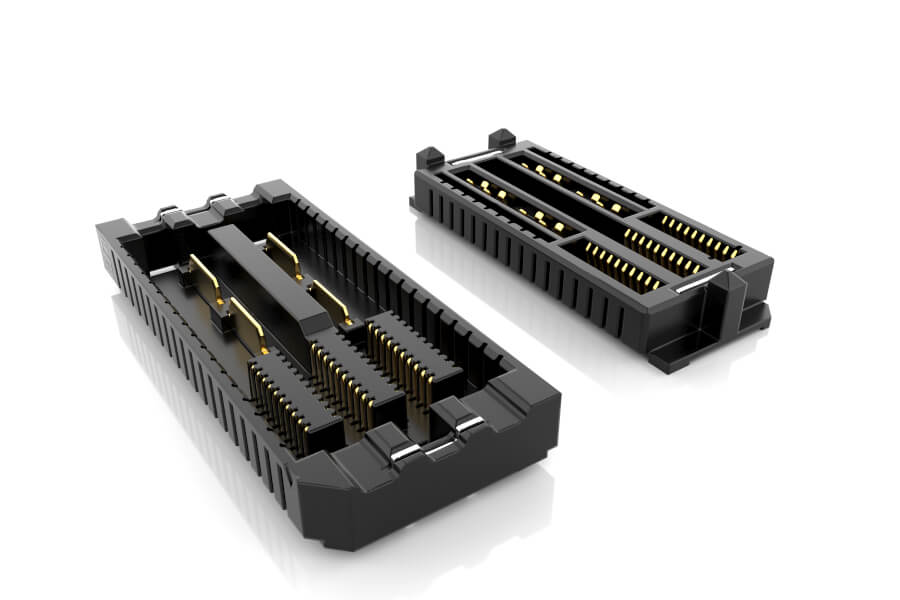
Many AI accelerator cards and edge computing gateways need to transmit both high-speed signals and high-current power through the same connector. The AcceleRate mP is designed for such scenarios, eliminating the need to route a separate power connector and saving both space and cost.
SEARAY is Samtec’s flagship product and the industry’s highest‑pin‑count, most flexible high‑speed array. The 1.27mm pitch version features up to 560 Edge Rate contacts, supporting 28Gbps NRZ and 56Gbps PAM4, with stack heights ranging from 7mm to 40 mm; a right‑angle variant is also available.
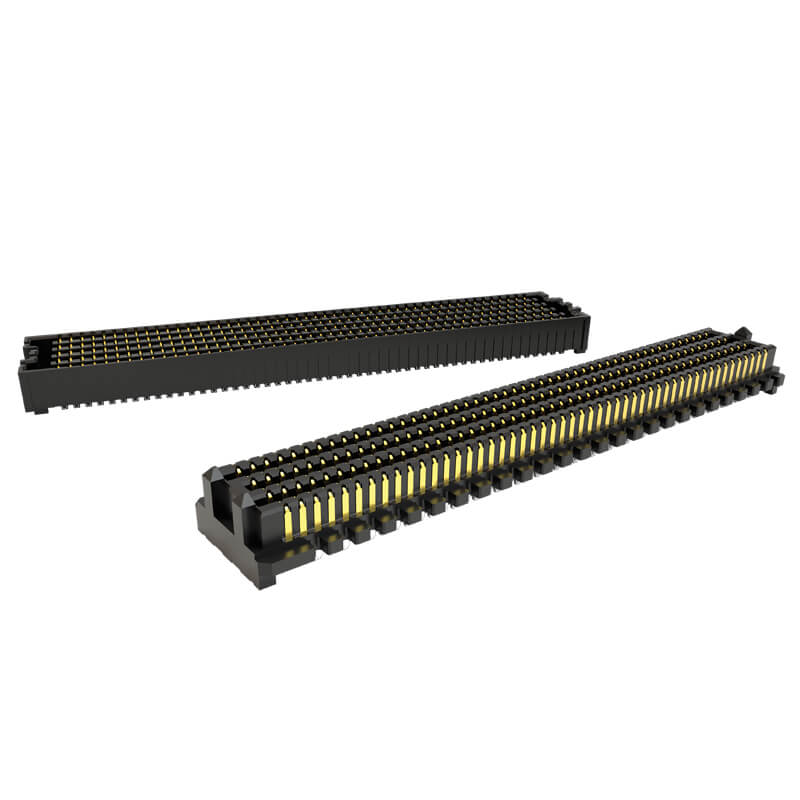
SEARAY’s greatest strength is that it “can be paired with anything.” Differential pairs, single-ended signals, and power lines can be freely combined within the same connector, ensuring compatibility with mainstream protocols such as Ethernet, PCIe, Fibre Channel, and InfiniBand. It also supports press-fit terminations, eliminating the need for soldering and making it well-suited for backplane applications. When used with mPOWER (UMPT/UMPS) power connectors, it enables flexible configuration of signal and power supplies.
The 0.80 mm‑pitch SEARAY 8 mm‑height version offers twice the contact density of the 1.27 mm‑pitch variant, supports up to 500 contacts, and is available in stack heights of 7mm and 10 mm, making it ideal for space‑constrained designs.
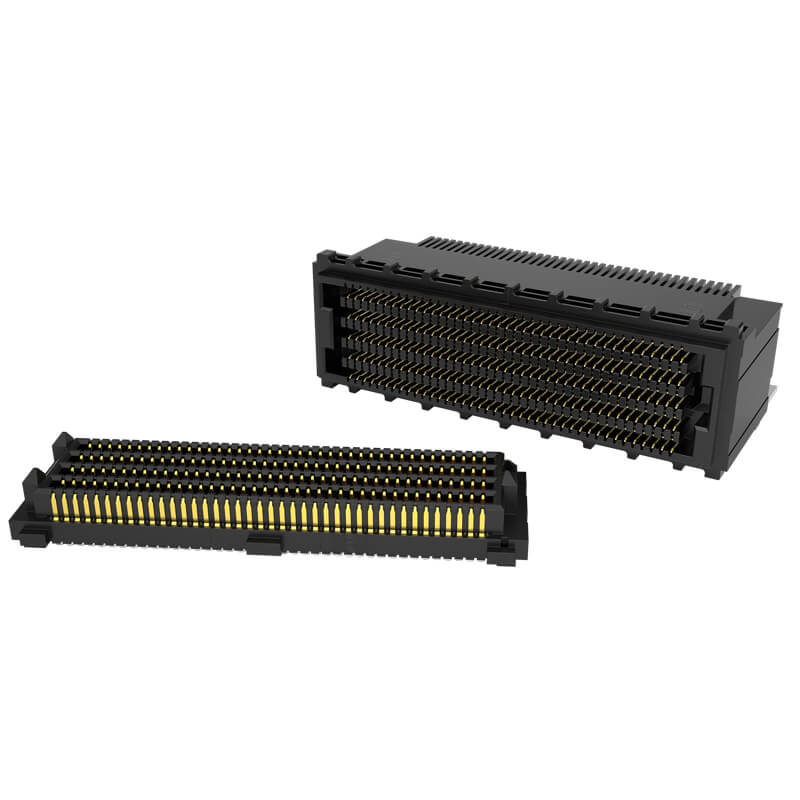
It is worth noting that SEARAY has passed Samtec’s stringent environmental tests (SET) and complies with the MIL‑DTL‑55302 standard, making it suitable for direct adoption in military‑grade projects. The SureCoat palladium-alloy‑plated version supports 10,000 mating cycles and can withstand high‑temperature, high‑cycle‑life applications.
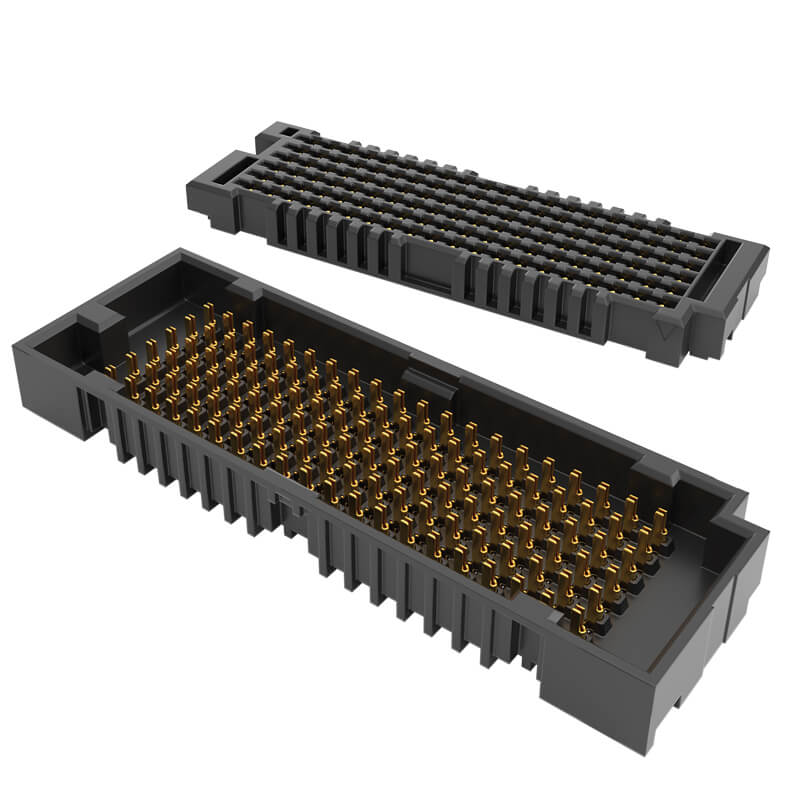
LP Array is a low-profile, dedicated array package with stack heights of only 4 mm, 4.5 mm, and 5 mm, supporting up to 400 pins (in 4-, 6-, or 8-row configurations) and featuring 1.27 mm-pitch dual-beam contacts. Suitable for ultra-thin devices, such as 1U servers and compact embedded chassis.
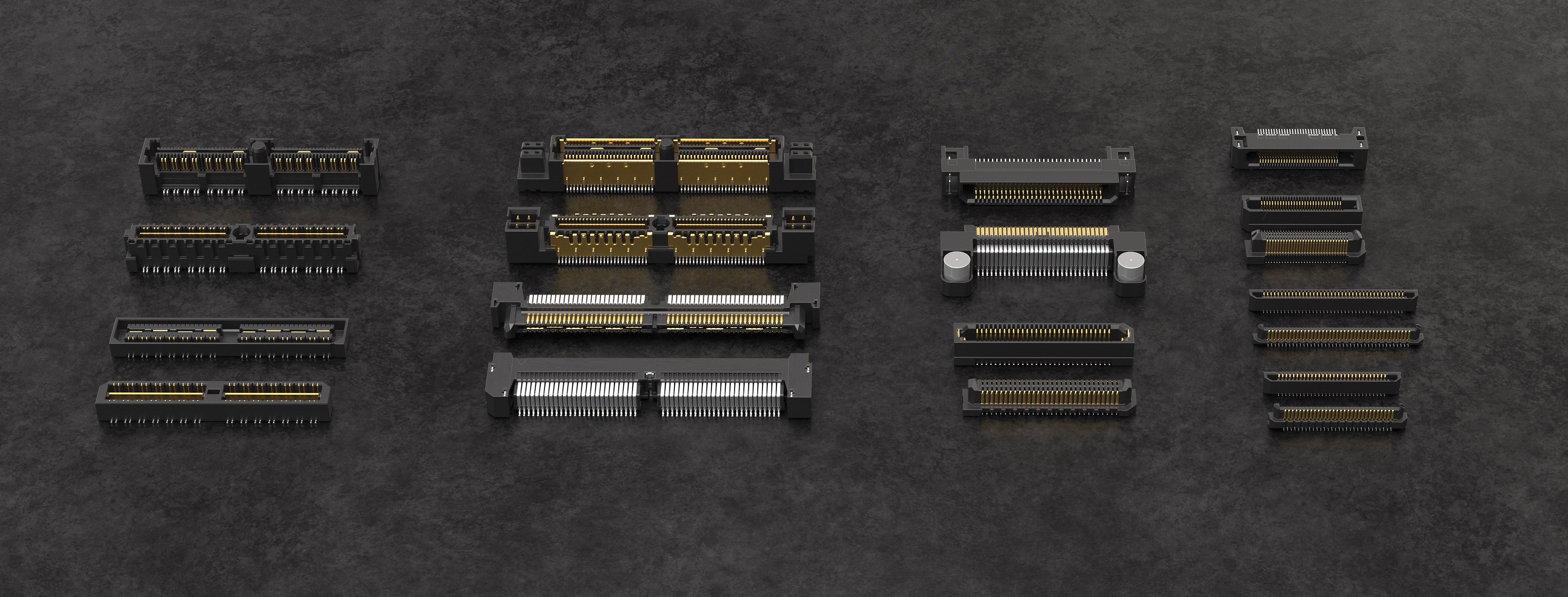
Dual-row straight headers are the most commonly used configuration in board-to-board interconnections, and all of Samtec’s dual-row straight headers employ the Edge Rate contact system. This contact system offers several tangible benefits:
Smooth milled mating surfaces ensure minimal wear and high durability.
Low insertion/extraction force, easy to handle on the production line.
When plugging and unplugging, it separates in a “zipper-like” manner, making the contacts less likely to be damaged.
Minimize the parallel plate area to reduce wide-edge coupling and crosstalk.
Simulations and optimizations were performed for both 50-ohm and 100-ohm systems.
The 0.80mm pitch version offers up to 200 positions, supports 56Gbps PAM4, and features a stack‑up height with over a dozen options ranging from 7mm to 18 mm. Additional options include differential pairs, hot‑swap capability, locking mechanisms, and shielding. It supports right-angle, edge mounting, and cable对接.
The 0.635mm pitch version is even narrower, with a board‑to‑board width of just 2.5 mm, up to 120 positions, and a low‑profile stack height of 5 mm, making it ideal for designs with stringent width constraints. The 0.50mm pitch version saves 40% of PCB space compared to the 0.80mm pitch, with a stack height of 7mm to 12mm and up to 150 positions, supporting 28Gbps NRZ signaling.
In practice, the Edge Rate series is a versatile choice—ideal for medium-to-high-speed applications, moderate material densities, and scenarios requiring flexible stacking heights; opting for it is virtually foolproof.
The core design of the ground-plane connector involves embedding a metallic ground‑power plane between two rows of signal traces; this configuration significantly reduces crosstalk between rows, while the metal plane can carry currents of up to 25 A.
Q Strip®It is a low-profile ground-plane connector, available in three pitch options—0.50 mm, 0.635 mm, and 0.80 mm—with performance up to 28 Gbps. Stack heights range from 5mm to 30 mm, and it supports both single-ended and differential signaling. The 0.50mm version complies with the PISMO 1 standard and is widely used in storage modules.
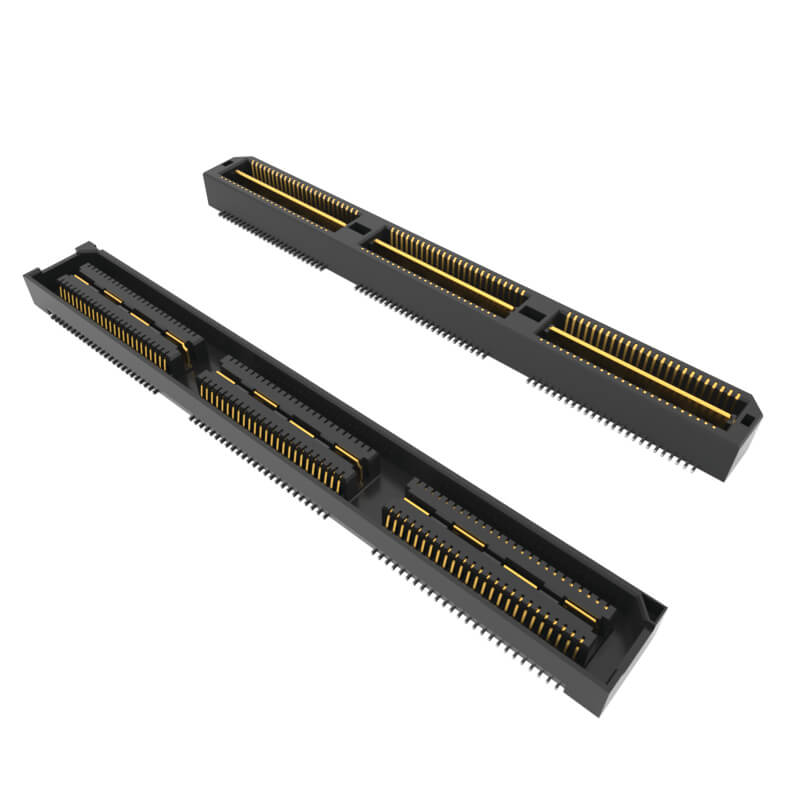
Q Rate®It is an ultra-thin version with a 0.80mm pitch, a 4.60mm board‑side width, up to 156 signal pins and 54 differential pairs, supports 28Gbps NRZ signaling, and features a stacking height of 7 to 14 mm.
Q2™It is a reinforced ground-plane connector with a 0.635mm pitch and a 1.60mm contact wipe length, offering greater insertion depth and specifically designed for harsh environments. Up to 156 signal pins/48 differential pairs, with an optional EMI shielding system, compliant with the SUMIT, PCI/104-Express, and PCI/104-Express OneBank standards; commonly used in military and industrial embedded applications.
When devices shrink to the size of drones, handheld terminals, and wearable military equipment, conventional connectors become too large. Samtec’s ultra-miniature series is specifically designed to address this issue.
ST4/SS4 micro‑sized blades/beam‑type connectors, with ultra‑fine pitches of 0.40mm and 0.50 mm, stacking heights from 2mm to 6 mm, up to 160 positions, and support for 56Gbps PAM4. The chassis is ultra-thin, with a significant reduction in PCB space.
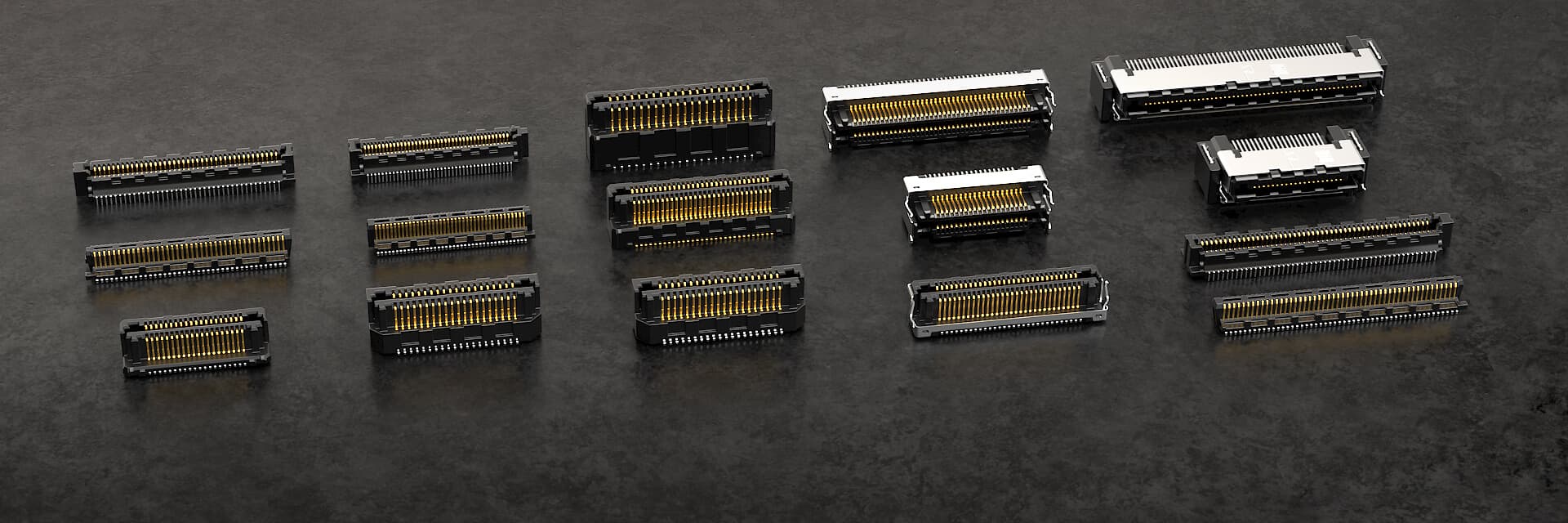
Razor Beam™Self-mating connectors are even more distinctive—they are hermaphroditic, meaning the same connector can mate with itself, cutting inventory costs by half and allowing interchangeability across different stacking heights. Three pitch options—0.50 mm, 0.635 mm, and 0.80 mm—10 to 100 positions, and ten stack‑height variants ranging from 5mm to 12 mm. The LSHM version has passed the rigorous SET environmental tests and complies with MIL‑DTL‑55302, making it suitable for direct use in military‑grade miniaturization projects.
Another advantage of self-mating designs in actual production is that only one type of component is required, eliminating the need to distinguish between male and female connectors, which prevents mis‑insertion on the assembly line.
Edge card connectors are what we commonly refer to as PCIe slots. Samtec’s Generate series spans a full range of pitch sizes, from 0.50mm to 2.00 mm, and supports data rates from 14Gbps to 64Gbps in PAM4 signaling.
A 0.60 mm-pitch version is available, supporting 64Gbps PAM4, with differential‑pair edge‑rate contacts, and compliant with SFF-TA-1002 (x4/x8/x16/x4C/x4C). It is compatible with PCIe 6.0 and CXL 3.1 and is paired with a 0.062-inch (1.60 mm) thick card.
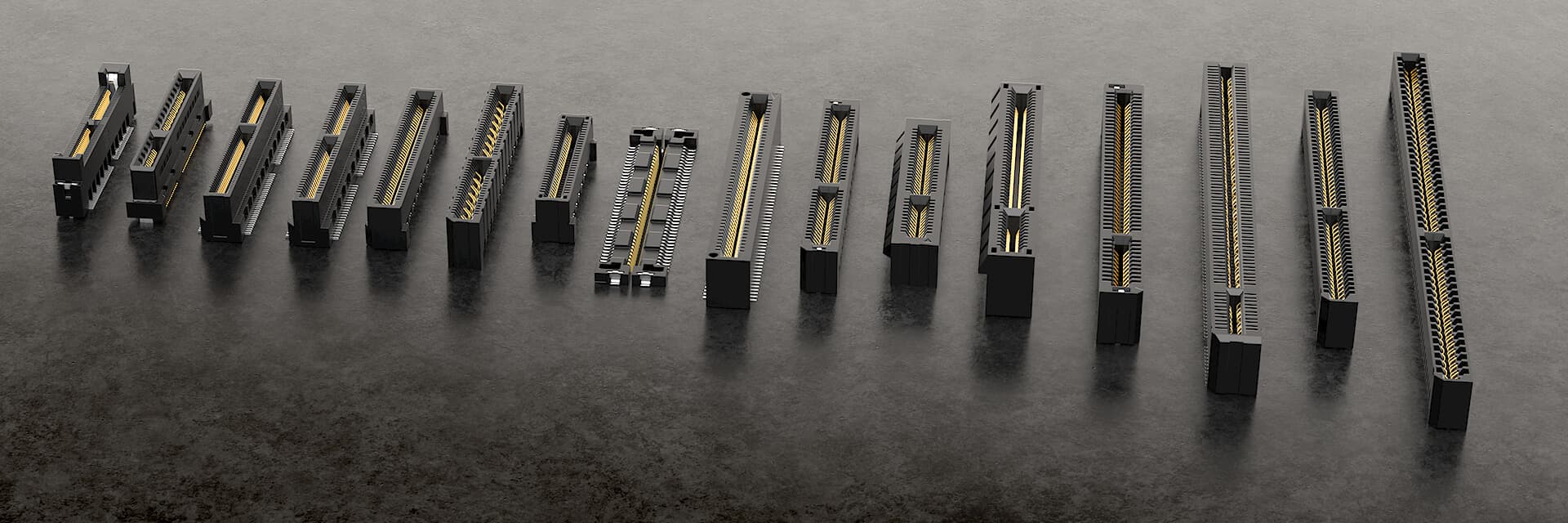
Generate a 0.80mm pitch version with up to 200 high-speed contacts, supporting 56Gbps PAM4; PCIe 4.0 is supported, and the differential‑pair version supports PCIe 4/5. Available in a power‑signal combo version (HSEC8‑PV) and a ruggedized PCIe 4.0 model featuring tucked‑beam technology (HTEC8), suitable for harsh environments.
For PCIe‑standard connectors, Samtec offers a full lineup including PCIe 3.0 (PCIE), low‑profile PCIe 4.0 (PCIE‑LP), ultra‑thin PCIe 4.0 (PCIE‑G4), and differential‑pair PCIe 5.0/6.0 (PCIE‑G5), all with a 1.00mm pitch and supporting x1/x4/x8/x16 lane configurations, paired with standard 0.062‑inch‑thick cards. CXL connectors are also part of the product lineup.
The backplane is the core of rack-mounted equipment, with all line cards, switch cards, and power supply cards interconnected via the backplane. Samtec’s backplane systems come in three architectures: conventional backplane, coplanar (bypassing the mid‑board), and direct‑mate orthogonal (eliminating the mid‑board to shorten signal paths).
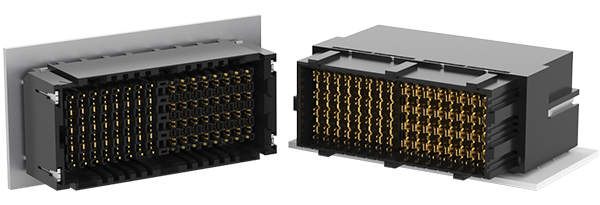 NovaRay’s micro-reinforced backplane is currently the highest‑speed backplane solution, supporting 112Gbps PAM4 and up to 128 differential pairs per connector. Offset pad design optimizes signal integrity, while dual-point contact enables stub-free mating and supports configurable signal groups. Wafer‑level design eliminates internal offsets, and continuous ground fingers suppress resonance. Optional guiding and keying enable blind mating, making it widely used in military and aerospace applications.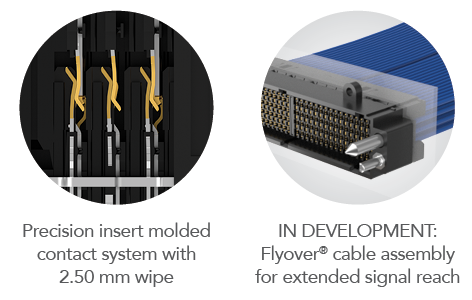
ExaMAX supports 64Gbps PAM4 and complies with industry standards such as PCIe, Intel OPI and VPI, SAS, SATA, Fibre Channel, InfiniBand, and Ethernet, exceeding the OIF CEI‑28G‑LR 28Gbps specification. 24 to 72 differential-pair designs, with reliable crimped‑tail terminations; power and discrete‑guide modules can be added.
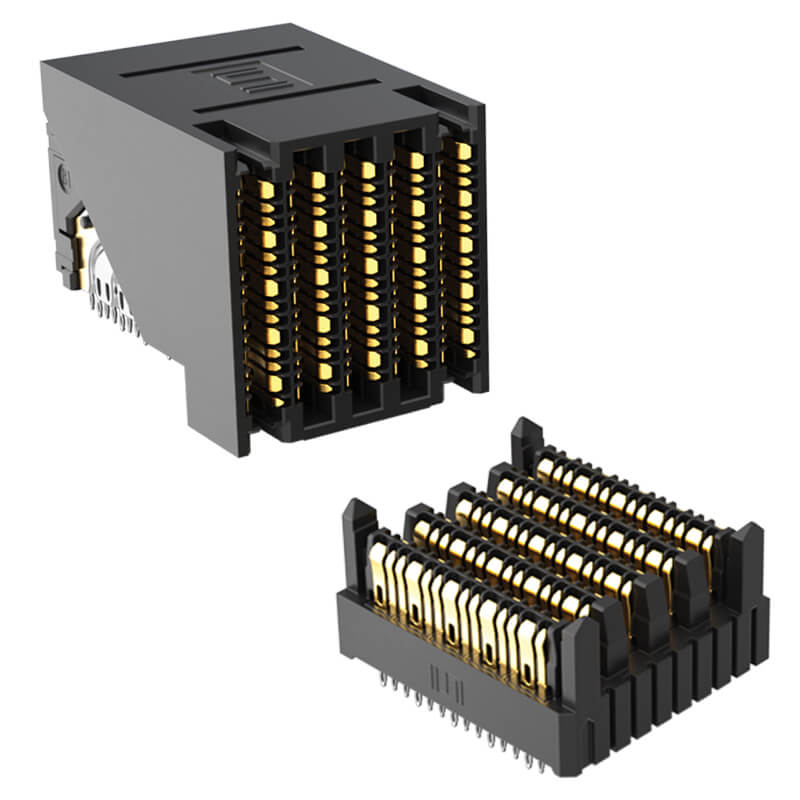
ExaMAX offers three architectures: the conventional backplane (EBTM/EBTF-RA), the coplanar design (EBTM-RA, bypassing the midplane), and the direct orthogonal configuration (EBDM-RA, eliminating the midplane to shorten signal paths). Its impedance is designed to be 92 Ω, while also being compatible with both 85 Ω and 100 Ω applications—highly practical, as it eliminates the need to switch connectors for different impedance standards.
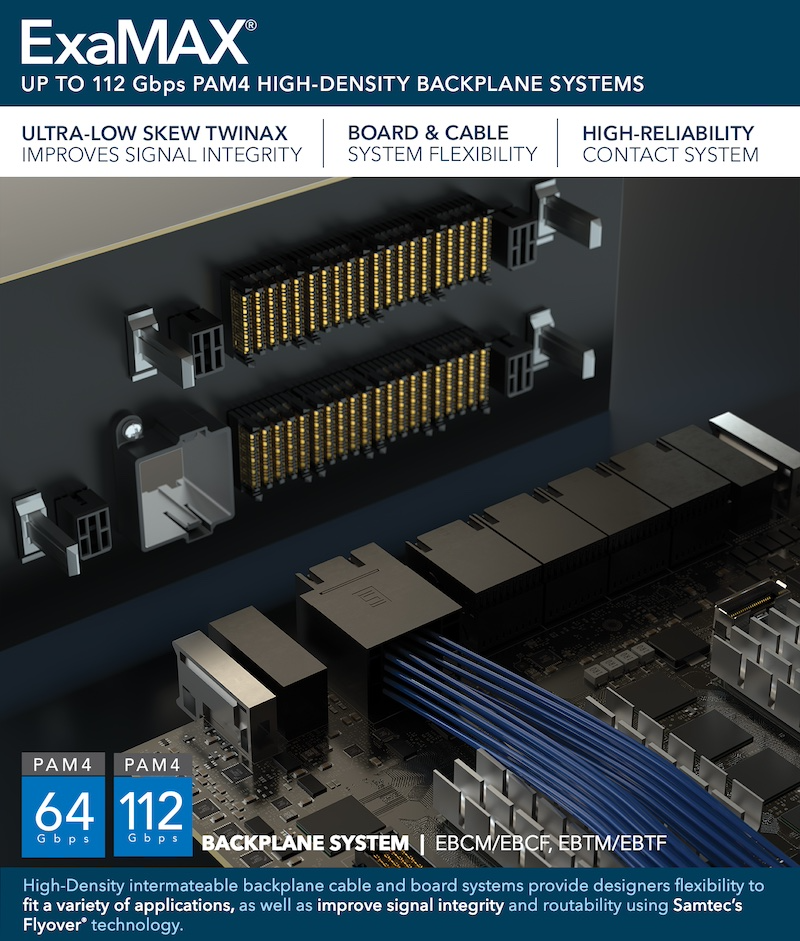
ExaMAX is also available as a cable‑assembly solution, featuring Samtec’s Eye Speed ultra‑low‑skew differential cables and supporting 112Gbps PAM4; it is compatible with PCIe 6.0 and CXL 3.1. Cable backplanes can reduce the number of PCB layers, lower costs, and offer greater architectural flexibility.
XCede HD features a compact, modular design, supporting up to 84 differential pairs per linear inch—compared to a maximum of 76 pairs in conventional backplanes. 3/4/6 pairs for cabling, 4/6/8 rows, available in 85Ω and 100Ω, with integrated power, guidance, keying, and side walls.
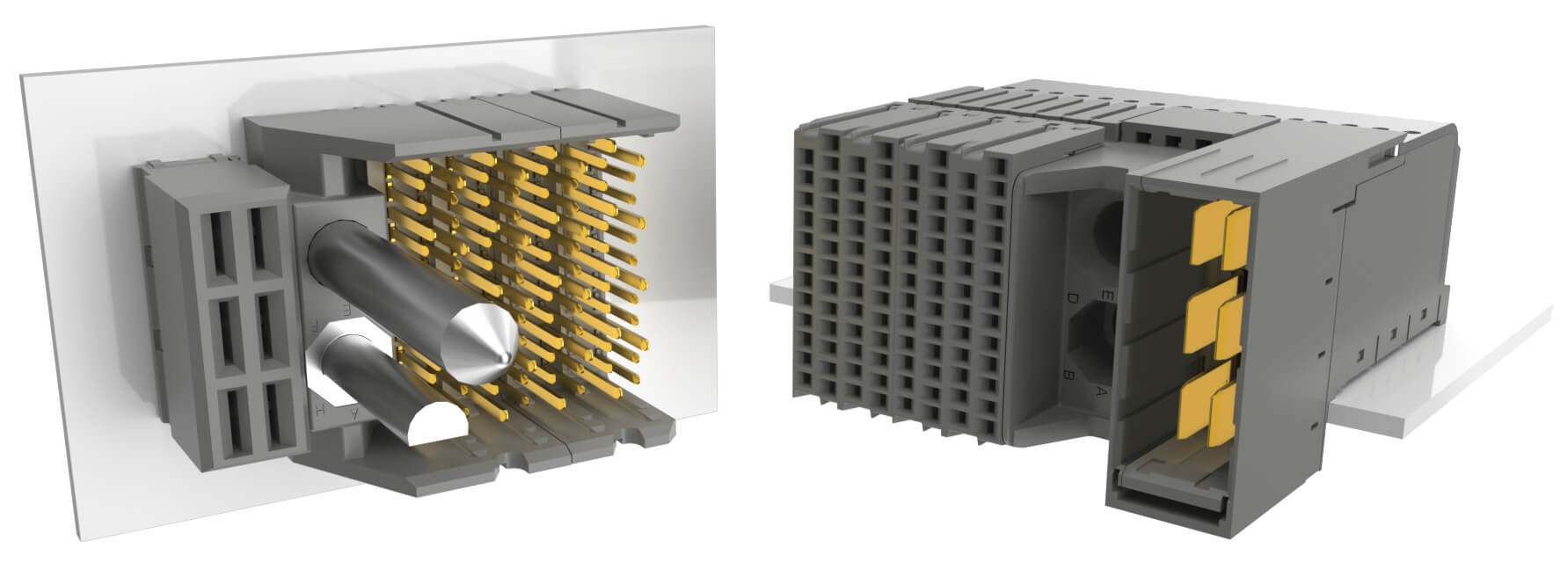
Its modular design offers great flexibility: signal, power, and keying/guidance modules can be freely combined into an integrated socket (BSP series), while the corresponding terminal modules are mounted separately to the backplane. Another thoughtful design feature: the ground pin makes contact before the signal pins, enabling hot-swapping without causing system downtime; the wiping length of the signal‑pair contacts reaches 3.00 mm, ensuring a reliable connection.
Samtec doesn’t just manufacture connectors; it also designs and produces high-speed cable assemblies in-house. The advantage of vertical integration is that the connectors and cables are pre‑optimized for compatibility, so customers don’t have to perform additional tuning themselves.
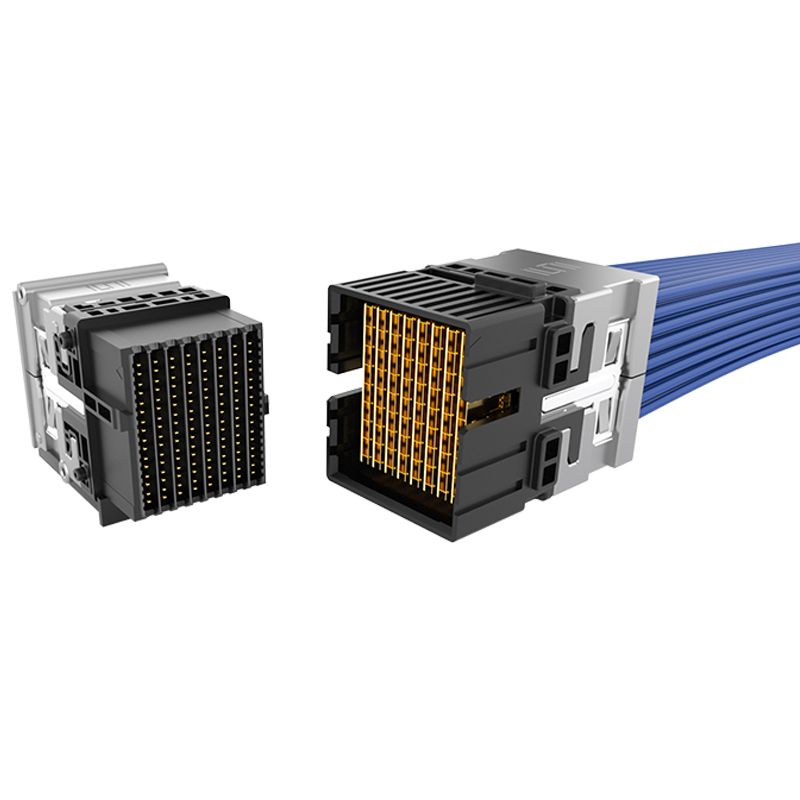
NovaRay cable assemblies (NVAC/NVAM-CT) support 112Gbps PAM4 and feature 34AWG ultra-low skew twinax cables; AcceleRate HP cables (ARC6) also deliver 112Gbps PAM4; AcceleRate HD cables (ARC6/ARF6) offer 64 Gbps PAM4; SEARAY cables (ESCA/SEAC) provide 14 Gbps. We also offer a full range of cable assemblies, including Edge Rate, the Q Series, ultra-miniature connectors, edge cards, and PCIe interfaces.
Eye Speed cable technology is a proprietary innovation from Samtec: a co-extruded twin‑axial cable that features tight coupling between the signal conductors, ultra‑low skew (<3.5 ps/m), and significantly superior signal integrity and eye‑diagram opening compared to conventional single‑extrusion twin‑axial designs, resulting in improved bandwidth and extended transmission distances.
Samtec provides SI evaluation kits for nearly every high-speed product line, including AcceleRate HP/HD, NovaRay, SEARAY, LP Array, Edge Rate, Generate mezzanine cards, and ExaMAX backplanes. Each kit includes an evaluation platform, a calibration board, technical documentation, and test reports, and is rigorously tested and validated by signal integrity experts prior to shipment.
In the FPGA kit lineup, we offer the FMC HSPC/HSPCe loopback card, FMC expansion cards, and the ExaMAX loopback card (for Xilinx Virtex UltraScale VCU110), enabling FPGA developers to rapidly validate high-speed links.
Online tools are also very useful: Simulator™Perform real-time, high-speed performance simulation with Channelyzer.®Perform full-channel simulation analysis, Solutionator®Quickly build paired connector sets online. These tools are available at no cost and allow you to predict link performance during the design phase, so you don’t have to wait until the board is returned to discover issues.
Samtec’s SET (Severe Environment Testing) program employs test standards that go beyond conventional industry specifications, drawing on military-grade criteria to ensure its products are suitable for extreme‑environment applications in defense, aerospace, automotive, and industrial sectors. SET-certified products meet or exceed all VITA 47.1 requirements, including module insertion, humidity, shock, vibration, temperature cycling, non-operating temperature, electrostatic discharge, and altitude.
Products that have passed SET certification include: the Tiger Eye miniature ruggedized system, SEARAY 1.27mm and 0.80mm arrays, Razor Beam self‑aligning connectors, Edge Rate ruggedized high‑speed straight‑line backplanes, the Tiger Eye 2.00mm miniature ruggedized system, mPOWER miniature power connectors, and the URSA I/O ultra‑ruggedized power system, among others.
NASA has also certified Samtec’s SET products for use in near-Earth orbit satellites, SmallSats, CubeSats, and other space missions. These products have been evaluated using NASA field data to confirm compliance with the outgassing requirements of ASTM E595-77/84/90.
Extended Life Product™(ELP) Long-life products have undergone a 10-year mixed-flow-gas (MFG) test, with a mating cycle life of 250 to 2,500 cycles. They are available with select plating and contact options, making them well-suited for long‑lifecycle projects.
A certain network equipment vendor is developing an 800G switch that requires ultra-high‑density, high‑speed interconnects between the line cards and the switching fabric board. It employs the NovaRay mini‑form‑factor backplane, featuring a single connector with 128 differential pairs and supporting 112Gbps PAM4, enabling the entire system to easily exceed an aggregate bandwidth of 4.0 Tbps. The dual-point contact design ensures a stable connection under the continuous vibration of data center fans, while the offset‑pad layout optimizes backplane routing. The coplanar architecture bypasses the mid‑plane, shortening the signal path and reducing insertion loss. From design validation to mass production, the project utilized Samtec’s ExaMAX SI evaluation kit for early‑stage link simulation, saving one month of debugging time.
A certain defense‑industry research institute has developed a ruggedized vehicle‑mounted computing platform, with requirements including an operating temperature range of −40°C to 85°C, resistance to severe vibration and shock, and PCIe Gen 4 connectivity. For inter‑board connections, a SEARAY 1.27mm pitch array (SET‑certified and compliant with MIL‑DTL‑55302) is selected; the Q2 reinforced ground‑plane connector serves as the expansion interface; and a Generate 0.80mm reinforced PCIe 4.0 edge card (HTEC8, featuring tucked‑beam technology) is used for the expansion card slot. All products have passed SET’s rigorous environmental tests, and the SureCoat palladium‑alloy plating supports 10,000 mating cycles, meeting the maintenance requirements throughout the equipment’s entire life cycle.
An AI company has developed a compact edge inference gateway, with a form factor of just 3U half‑width, that needs to simultaneously support an AI accelerator card, multiple camera inputs, 4G/5G modules, and a high‑current power supply. We selected the AcceleRate mP integrated signal‑power array (64G PAM4, 8‑lane power supply, 240‑lane signaling), which uses a single connector to handle both high‑speed signal and power transmission, eliminating the need for a separate power connector. The AcceleRate HD ultra‑thin array serves as the interconnect between the camera interface board and the main control board, with a 5‑mm body width that easily fits into compact enclosures. The LP Array, a low-profile antenna array, is used for storage-module interconnections, and its 4.5mm stacking height keeps the overall device thickness within the design target.
Based on my years of experience helping clients with system selection, here’s a simple decision-making framework:
Set the rate first.:112G PAM4 选 NovaRay 或 AcceleRate HP;64G PAM4 选 AcceleRate HD/mP 或 ExaMAX;56G PAM4 选 SEARAY、Edge Rate 0.80mm、Generate 0.80mm;28G NRZ 选 Edge Rate 0.50mm、Q 系列、SEARAY 基础版。
Re-determine the formFor board-to-board applications with multiple channels, choose the array; for medium‑density designs, select the dual‑row straight‑line configuration; for mixed signal‑power applications, opt for the AcceleRate mP or Q series; for expansion cards, go with edge cards; for rack backplanes, choose ExaMAX or XCede HD; and for ultra‑compact spaces, select the ultra‑miniature series.
Look at the environmentFor aerospace and defense applications, choose SET‑certified products (SEARAY, Edge Rate ERM8/ERF8, Razor Beam LSHM, Q2, etc.); for long‑life‑cycle requirements, select ELP products; and for high mating cycles, opt for the SureCoat plated version.
Need sample verificationSamtec offers 24-hour free samples, and SI evaluation kits allow you to perform link validation in advance—don’t wait until mass production to discover signal integrity issues.
If you’re selecting high-speed interconnect solutions, BonChip Electronics is an authorized and specialized distributor for Samtec’s full range of high‑speed board‑to‑board and backplane interconnect products. We support inquiries, sample requests, and bulk orders for the entire portfolio of genuine, original components, including NovaRay, AcceleRate, SEARAY, Edge Rate, ExaMAX, XCede HD, and Generate edge cards. We also offer comprehensive one‑stop technical services, maintain global inventory across multiple warehouses, and ensure fast, convenient delivery. Whether it’s AI servers, data center switches, military-grade embedded systems, or aerospace payloads, we can help you quickly match part numbers, provide samples, and ensure mass-production delivery.
After 2026, high-speed interconnects are heading in several well-defined directions: single‑lane rates are evolving toward 224Gbps PAM4 (Samtec’s Si‑Fly MZ mid‑plane system is already on the roadmap, supporting 224G PAM4 and an aggregated data rate of 6.4 Tbps); backplane architectures are shifting from traditional mid‑planes to coplanar, direct orthogonal, and cable‑based backplanes, shortening signal paths and reducing losses; AI clusters’ demand for aggregated bandwidth continues to surge, with 4.0Tbps merely serving as a starting point; and in the defense and aerospace sectors, the need for COTS‑hardened products is growing, making SET certification the new standard.
Samtec’s comprehensive product portfolio, combined with its in-house cable development, SI engineering support, online simulation tools, and rapid‑turn sample services, forms a well‑integrated high‑speed interconnect ecosystem. For hardware engineers, choosing the right connector supplier is not just about purchasing components—it’s about acquiring a comprehensive support system that spans design validation through to mass‑production delivery.